Author: José Luis Conde
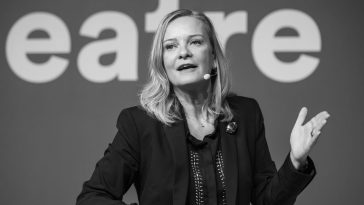
Eva Ballarín (Barcelona, 1970) is considered one of the most influential women in the world of gastronomy. This trend, innovation and strategy researcher and director of the Hospitality 4.0 Congress for HIP Madrid of the HORECA Channel (Hotels, Restaurants and Cafes), has recently participated in the Gastroexperience Labs program, organized by the Cabildo de Tenerife, where she taught the Master class on gastronomic marketing Redesigning the tourism strategy.
Do chefs open restaurants in the menu content today without taking into account the scandal?
“The scandal is the starting point of everything, it is the core of management. If we don’t know what things cost us, how are we going to know how much we have to sell them? If we do not analyze our costs well, how can we negotiate with a supplier; If we do not know the incidence of each of the product categories that our menu or our menu has, how are we going to be able to make sound decisions about changes of dishes or ingredients. The scandal is the basis on which to start building a gastronomic offer and on which to start building a way of managing a restaurant. Normally scandals are still being done a lot in Excel today, something with which I am totally against, well, not against that that is very radical, but I totally advise against restorers who use it. Why? Because it is a template where you have to make a series of approaches, you have to structure the formulation, and it is a template that is not updated. Today we have wonderful tools, software programs where you, once you have entered your entire warehouse, all your inventory, your suppliers, add the quantities of each of the elements and a dynamic scandal is generated ”.
The word gastronomic experience is not a bit worn out already, because experience can be almost everything?
“It’s that everything is an experience. Right now we could go to Wikipedia or the SAR to consult the meaning of experience and it fits us in everything. An experience is something we live, good or bad. And in gastronomy, obviously, the sensory impact we have in any type of gastronomic offer or in any place is something we feel, everything is an experience. I always argue that we don’t have to become obsessed with trying to build sophisticated experiences. I am from Barcelona and I love Sunday mornings to go to a vermutería called El Tano, which is in my neighborhood, to take a village vermouth, from a barrel; and there what they have is very good latería, razors, cockles, clams, squid. It is a very small, old style vermouth. At the end of the experience, what we have to try is to build a series of elements that make our client value it positively, be memorable in their head and recommend it to others. Something that is good, positive, beautiful, that is also memorable and also gives us the opportunity to recommend it. ”
Facebook is still an essential tool to defend a restaurant
“A year ago I wrote a post I called‘ Facebook, the king of social media for restaurants. ” I’m not so sure today, I don’t know if Instagram killed or is killing Facebook; What is true is that Instagram is the fastest growing social network in the last year. What is certain is that more and more people share their experience, their dishes, their experience on Instagram; The people of the sector bet heavily on Instagram and it is becoming a very important promotional tool. If I had a restaurant, I would have Facebook and Instagram, but I would have my eye on how Instagram moves and how it can support me. But Facebook in Spain is still the most popular social network. ”
And someone who knows so much about restaurants would ride one …
“… Note that I have spent many years dedicated to the operation of hotels and restaurants and setting up one is always something that is very exciting, but I know the complexity of a restaurant; It demands a certain skills and commitment that I am not willing to give at this moment in my life as it is an iron discipline. A restaurant is a business that demands a lot of discipline, demands a lot of perfection, demands constant attention and has a complexity that I don’t want to assume right now. One of the most exciting and wonderful businesses in the world, yes; but also, as I say a lot in my manual, if you do not meet those requirements do not get involved because it is very hard. The ratio of transfers, closing of businesses that open is very high and it is because a restaurant demands from the person who leads it, some skills, some knowledge and a very, very, very demanding commitment ”.
Are Michelin or Repsol guides outdated?
“It seems to me that the Michelin Guide, when it gives David Muñoz three stars or a star to a street food in Asia, is not being conservative. It is true that the Michelin Guide is a publication of French reason and essence, where the perception of quality and gastronomic excellence has a high level of gastronomy. The Repsol Guide too. There are other publications, other rankings, other guides … I think it is very good that we have variety. When we consult the Michelin Guide we already know a little of what is going on, when we consult the Repsol as well, and when we go to The best of World we already know what we are going to. It is very good that each of these publications has different criteria and can reward, value, give visibility to different gastronomic models. I think it’s interesting and I think the Michelin Guide has to be true to what it is, obviously evolving because times are changing, but maintaining its identity is also a reflection of its criteria. ”
And what does TripAdvisor look like…
“It is a great phenomenon. On the one hand, as its founder said many years ago, it has been a tool to democratize opinions. Trip Advisor has many readings. For the user, on the one hand, he has the reading that it is a tool for sharing very good experiences or assessments; a tool that allows you to locate yourself when you go to a city, but also has the reading that it can be a weapon of revenge. I did not like the chef, I did not like the service, it is a subjective opinion; I did not like it, I do not say that it is bad, and we overturn that disappointment in Trip Advisor sometimes in a way that can harm the restaurant. And, on the other hand, for the restaurateur it has the advantage that if you have many people who like them they will position you well, but it has the disadvantage that if there is a group of people who do not like them they will punish you for it. But for the restaurateur, notice that it has an impressive advantage and that it is telling you many things, from which we can get many ideas to improve our gastronomic offer, our service. That sometimes we abuse it with bad faith, because it is in the human spirit sometimes not to use the tools to form correctly. I have been very critical of El Tenedor and I have had encounters with them and very important moments of conflict because it has seemed to me many times that their way of marketing was not in line with what I believe. ”
In Spain, traditional bars are disappearing in favor of franchises. Is this a loss of cultural identity?
“What I see is that there is a diversification of models. I see that there are young people, millennial, who are opening business models that are interesting; I see family tradition restaurants where second and third generations are taking over, and I also see that the restoration of franchises, restaurant chains, offer a very attractive type of business for an investor because it is a business that is already tested. I believe that there will be a coexistence of both. That bars are disappearing, I don’t know; there are more than 300,000 establishments in Spain with an incredible turnover; We are the country in the world that has more hospitality establishments, at some point this has to be regulated. And in the end in the market, like it or not, the demand is what commands. There is tremendous growth in franchises, believe me, also because the franchise is reinventing itself. ”
Mandi Ciriza, director of Canal Cocina said the other day, that the day will come when eating a fabada will be like going to Atapuerca. What do you think?
“That the young people will go to eat a fabada as if they were going to Atapuerca and my mother there is no way to take her to a Japanese restaurant. The exotic palaba comes from unknown, twenty years ago sushi was exotic, today it is not. If we stop having the traditional dishes of Spanish cuisine so available to everyone and so present in the restaurant menus they will be exotic. If the fabada is not positioned in the usual restoration it will end up being something hypermegaexotic. There are many recipes that are lost domestically, who today knows how to make good lentils, good chickpeas; who knows today how to make a good zarzuela of fish …, all that for the rhythm of life that we lead. Notice that paradoxically we are at the moment of humanity where we know the product the most, the more we talk about cooking, the more we see cooks on TV and in the media, the more we mitigate the cook’s trade; the moment that paradoxically explodes gastronomy the most is the moment when we cook less. ”
And this implies a loss of cultural identity or, on the contrary, miscegenation is the usual
Is cultural identity what defines a society or is cultural identity the historical basis? I think that in Spain sushi fits. Cultural identity is our historical roots or is what we live now. The cultural identity had to be defined. I believe that in our country the cultural identity in terms of gastronomy is cosmopolitan, of fusion, of integration, of incorporation of new products, is very different. If we are talking about tradition, I will tell you that, if we do not have a constant motivation to teach product, to work with it, of those recipes to put them back in the restaurant, if we do not do that, it is possible that we are left with something along the way. The founder of Slow Food always defends that the cook is a much more important actor than a guy behind the stove, he is an actor that transforms culturally, with a lot of influence in society. We know many products or techniques because chefs promote them. There the cook, together with the producer, always, when they join forces and start doing things, is the best impulse that can be given to the culinary tradition. ”
One of the issues that are in vogue is the use of vegetable proteins. What are the latest advances?
“It is super interesting all the movement that there is of the vegetal protein. We have realized several things and it is that the world population is growing a lot and if we continue at this rate in 2050 we will not have food for everyone, especially as we understand it now. On the other hand, we have realized that the environmental impact of livestock is tremendous. From here, what we have is a series of people from all disciplines, researchers, scientists, biologists, nutritionists, laboratory people, cooks, who are beginning to develop different solutions when generating a type of food that we provide the same protein value as red meat or poultry, but that does not have that impact. And right now we have been able to replicate red meat making vegetable burgers. One of the leading companies that makes vegetable protein in the form of hamburger meat is called BioMeed, an American company that will start distributing in Spain in a few months; there is another American company Impossible Foods that also does it and these people what they get, which is absolutely fascinating, is that their hamburger has the same texture, the same bite; Organoleptically, it can’t be the same as meat, but if they blindfold you, they put the hamburger on and take a bite and go through meat. On the other hand, there are people who are doing the same thing with chicken, such as Food for Tomorrow, a company in Barcelona that markets a product called Heura that is chicken without being it, is made from soybeans. There are prawns too. And now what is being done is to create meat from the techniques of creating human tissue cultures, there is a man who has already made a steak. If we continue to grow at this rate in 2050 we will not have food for everyone. When protein production is not enough, we will need to remedy it; When we see that our reserves have such a tremendous impact, it will be time to start thinking. We are not talking about the disappearance of meat, but we can find solutions to complement the protein level. The food industry often causes us a certain distrust but we don’t have any pharmacology; If you take an aspirin made in a laboratory, why not eat a hamburger, take it in a laboratory too. ”
Original article here (Spanish)